Exploring Top Environment Variable Security Tools for Robust Application Development in 2026
Effectively securing environment variables is critical for preventing sensitive data breaches and maintaining the operational integrity of any application. In 2026, as software supply chain attacks and sophisticated cyber threats continue to escalate, neglecting the secure handling of configuration secrets like API keys, database credentials, and third-party service tokens is no longer an option. This curated list explores top environment variable security tools and solutions that empower developers and operations teams to protect their applications across all environments, from local development to production.
The Imperative of Secure Environment Configuration
Environment variables are a fundamental mechanism for configuring applications, allowing code to remain consistent while deployment-specific settings change. However, this convenience introduces a significant security surface area if not managed properly. Hardcoding secrets, committing .env files to version control, or using insecure injection methods can expose sensitive data to unauthorized individuals, leading to costly breaches and compliance violations. Modern development practices demand robust strategies and dedicated tools to ensure that these critical pieces of information are protected throughout their lifecycle, from generation to access and rotation.
The principle of least privilege, applied to configuration data, dictates that applications and services should only have access to the environment variables necessary for their operation, and for the shortest possible duration. This minimizes the impact of potential compromises.
— National Institute of Standards and Technology (NIST)
Key Considerations When Choosing a Tool
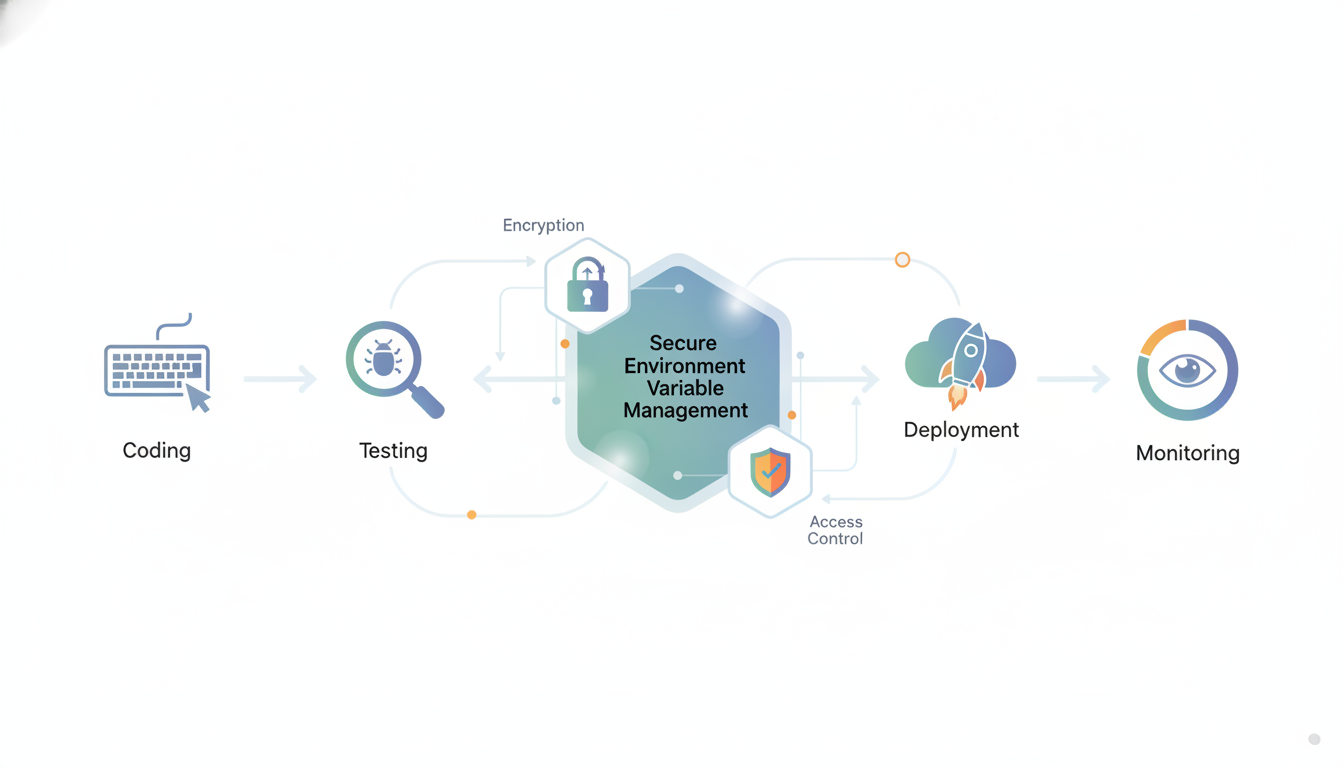
Selecting the right environment variable management playbook involves evaluating several factors tailored to your team’s specific needs, existing infrastructure, and security posture. Consider scalability: can the solution grow with your application and team? Integration is also vital; the tool should seamlessly fit into your existing CI/CD pipelines, version control systems, and cloud environments. Furthermore, assess its security features, such as encryption, access controls (RBAC), auditing capabilities, and secret rotation. Finally, evaluate the complexity of deployment and maintenance, opting for solutions that strike a balance between powerful features and ease of use to minimize operational overhead.
Top Tools for Secure Environment Variable Management
Here are some of the leading tools and platforms that provide robust solutions for securing environment variables and managing application configurations securely:
1. HashiCorp Vault
HashiCorp Vault is an industry-leading tool for secret management, identity-based security, and data encryption. It securely stores, tightly controls access to, and systematically logs access to sensitive data and secrets. Vault allows you to centrally manage secrets across diverse infrastructure, offering features like dynamic secrets, secret leasing, and revocation capabilities. It’s an indispensable solution for large enterprises and complex distributed systems that require stringent security controls and audit trails.
Best for: Enterprises and organizations with complex, multi-cloud, or hybrid environments requiring advanced secret management capabilities, dynamic secret generation, and robust auditing.
2. Doppler
Doppler offers universal secrets management, providing a centralized platform to manage environment variables and secrets across all environments (development, staging, production) and all teams. It integrates seamlessly with popular frameworks, cloud providers, and CI/CD pipelines, ensuring that secrets are delivered securely to where they are needed. Doppler simplifies secret rotation, access control, and auditing, reducing the risk of exposure and streamlining development workflows.
Best for: Development teams of all sizes looking for a comprehensive, easy-to-use secrets management platform with strong collaboration features and broad integration support.
For a detailed comparison of solutions like Doppler, consider reviewing resources that compare Dotenv vs. Doppler to understand their respective strengths.
3. AWS Secrets Manager / Azure Key Vault / Google Secret Manager
These are cloud-native secrets management services offered by the major cloud providers. They allow you to store, manage, and retrieve secrets throughout their lifecycle within their respective cloud ecosystems. Key features include automatic secret rotation, fine-grained access control using IAM roles, encryption at rest and in transit, and comprehensive auditing. Utilizing these services tightly integrates secret management with your cloud infrastructure, simplifying deployment and enhancing security posture within a single cloud vendor.
Best for: Organizations heavily invested in a specific cloud provider, seeking integrated secrets management that leverages their existing cloud security and identity infrastructure.
4. GitGuardian
GitGuardian specializes in real-time secret detection in source code. It continuously monitors public and private Git repositories, identifying and alerting on exposed secrets such as API keys, database credentials, and certificates. This proactive approach helps prevent secrets from being committed and pushed into version control systems, addressing a common vulnerability point in the software development lifecycle. GitGuardian also offers remediation workflows to quickly revoke and replace compromised secrets.
Best for: Development teams and organizations prioritizing prevention of secret exposure in source code and requiring continuous monitoring for sensitive data leaks in their repositories.
5. Infisical
Infisical is an open-source, end-to-end encrypted platform for secret management. It provides a centralized dashboard for managing secrets, offering features like versioning, access control, and integrations with various development tools and infrastructure. Being open-source, it offers flexibility and transparency for teams that prefer to self-host or have specific compliance requirements. Infisical aims to be a developer-friendly solution for managing environment variables and secrets securely.
Best for: Teams looking for an open-source, self-hostable alternative for secret management, offering strong encryption and a developer-centric experience.
6. Kubernetes Secrets and External Secrets Operator
While Kubernetes Secrets provide a native way to store sensitive information within a cluster, they are base64-encoded, not encrypted at rest by default without additional configuration. For enhanced security, tools like the External Secrets Operator bridge the gap by syncing secrets from external secret management systems (like Vault, AWS Secrets Manager, etc.) into Kubernetes as native Secrets. This allows teams to leverage robust external secret stores while still benefiting from Kubernetes’ native secret consumption mechanisms.
Best for: Teams running containerized applications on Kubernetes, seeking to integrate their cluster’s secret management with more secure, external secret stores.
7. Envault
Envault is another open-source, self-hostable secrets management solution designed to provide a secure and simple way to store and retrieve environment variables and secrets. It emphasizes ease of use and aims to be a straightforward alternative for smaller teams or projects that need a centralized secrets store without the complexity of larger enterprise solutions. Envault supports encryption, access control, and integration with popular CI/CD pipelines.
Best for: Small to medium-sized teams and projects that prefer a self-hosted, open-source solution with a focus on simplicity and ease of deployment for fundamental secret management needs.
8. Ansible Vault / Chef Vault
These tools are components of popular configuration management systems (Ansible and Chef, respectively). They allow users to encrypt sensitive data, such as API keys and passwords, within files that are part of their configuration management repositories. This enables teams to keep sensitive data within version control without exposing it in plaintext. The encrypted data can only be decrypted with a specific password or key, making it secure for infrastructure automation and deployment tasks.
Best for: DevOps teams heavily using Ansible or Chef for infrastructure as code, needing to securely manage secrets directly within their configuration management workflows.
9. Snyk / Checkmarx (Secret Detection within SAST)
Beyond dedicated secret scanners like GitGuardian, many Static Application Security Testing (SAST) tools, such as Snyk and Checkmarx, now incorporate secret detection capabilities. These tools analyze your codebase, dependencies, and configuration files to identify potential security vulnerabilities, including hardcoded secrets or exposed environment variables. By integrating SAST into CI/CD, teams can catch secret leaks earlier in the development process, improving overall application security posture.
Best for: Organizations already using SAST tools for code security, looking for an integrated solution to detect secrets alongside other code vulnerabilities within their existing security pipelines.
10. Dotenv with Secure Injection Practices
While dotenv itself is a popular package for loading environment variables from a .env file in local development, it doesn’t offer inherent security for production. However, when combined with secure injection practices (e.g., using a CI/CD platform’s built-in secret management or cloud provider environment variable settings), it becomes part of a robust solution. For local development, ensuring .env files are properly excluded from version control (e.g., via .gitignore) is fundamental. This approach often serves as a baseline, prompting a more secure approach for production environments.
Best for: Individual developers and small teams managing local development environments, provided they adhere to strict practices for excluding .env from version control and use secure methods for production. Learn more about how to use dotenv effectively and securely.
To further enhance security, consider how you generate sensitive information. For instance, an API Key Generator can provide strong, unique keys for various services, and pairing this with a secure management tool is crucial.
Integrating Secure Practices into Your DevOps Pipeline
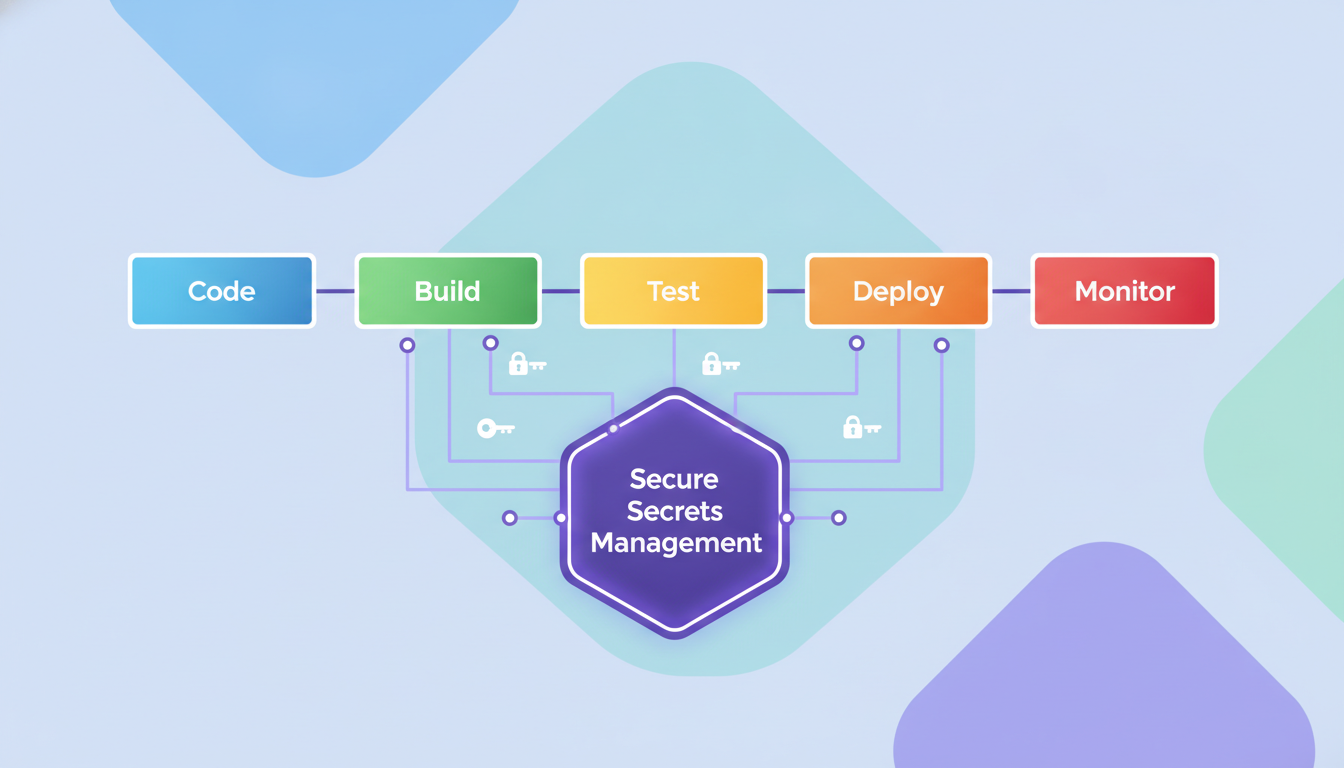
The true power of these environment tools lies in their seamless integration into your development and deployment workflows. Implementing secret scanning early in the CI/CD pipeline, before code reaches production, is a critical preventative measure. Automated secret rotation, facilitated by many of the listed tools, significantly reduces the window of opportunity for attackers to exploit compromised credentials. Furthermore, leveraging identity and access management (IAM) systems with fine-grained permissions ensures that only authorized services and personnel can access specific secrets. This holistic approach to secure environment configuration forms the backbone of a resilient security strategy.
Security should be a continuous process, not a one-time event. This applies equally to secrets management, where regular audits, automated scanning, and timely rotation of credentials are key to maintaining a strong security posture.
— OWASP (Open Web Application Security Project)
Streamline Your Environment Management with Envtools
Navigating the complexities of environment variable management is essential for modern development. Whether you’re comparing solutions like dotenv vs. secrets manager or looking for an environment variable generator, Envtools provides comprehensive resources to help you. Our platform offers a suite of tools and guides to streamline your configuration process, enhance security, and ensure consistency across all your projects. Explore our extensive library of generators, validators, and comparative analyses to find the perfect solutions for your needs. Secure your application configurations with confidence.
Frequently Asked Questions About Secure Environment Variable Management
Which tool is best for small teams just starting with secret management?
For small teams, Doppler or Infisical offer a good balance of features, ease of use, and integration capabilities, with Infisical providing an open-source option.
How often should environment variables and secrets be rotated?
The frequency depends on the sensitivity of the secret, but a common best practice is quarterly rotation, with critical secrets rotated more frequently, and automated rotation whenever possible.
Can I use a combination of these tools?
Yes, many teams combine tools (e.g., GitGuardian for scanning and HashiCorp Vault for storage) to build a multi-layered security strategy tailored to their specific infrastructure and development workflow.
What’s the primary difference between a secret scanner and a secret manager?
A secret scanner (like GitGuardian) identifies exposed secrets in code or public repositories, while a secret manager (like Vault) securely stores, controls access to, and manages the lifecycle of secrets that are actively in use.